
Currently Empty: ₹0.00



AI-Powered Cloud & DevOps Engineering Programme | Annwen Technology
Detailed Course Curriculum
Phase 1: DevOps Core Engineering
Build a strong technical foundation in the tools and workflows used in modern DevOps environments.
Topics covered:
-
DevOps Fundamentals
-
Agile, Waterfall, and DevOps methodologies
-
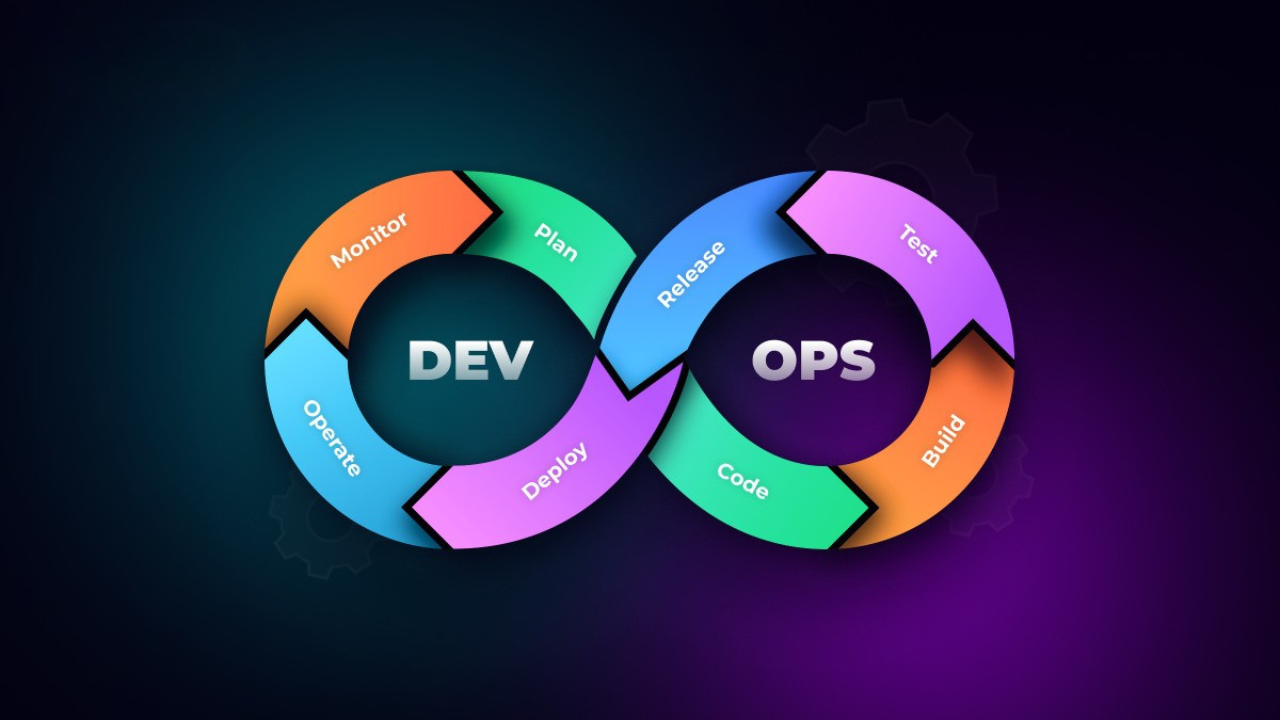
DevOps lifecycle and principles
-
Continuous integration and continuous delivery
-
Automation and collaboration in software delivery
-
-
Linux Fundamentals
-
Linux architecture and distributions
-
Essential commands and file permissions
-
User management and SSH
-
Vi editor and shell scripting
-
-
Python Scripting for DevOps
-
Python fundamentals, operators, and expressions
-
Collections, conditions, and loops
-
Functions, modules, and libraries
-
File handling, object-oriented programming, and exception handling
-
Python for operational automation
-
-
Git and GitHub
-
Version control concepts and repository management
-
Branching, merging, rebasing, and reverting
-
Git workflows and remote repositories
-
Managing projects using GitHub and VS Code
-
-
Maven Build Automation
-
Build tools and Maven architecture
-
Maven commands and plugins
-
Building web, standalone, and enterprise applications
-
-
Jenkins and GitHub Actions
-
Jenkins installation, configuration, and plugins
-
Freestyle jobs and pipeline jobs
-
Declarative and scripted pipelines
-
Build triggers, deployment workflows, and notifications
-
GitHub Actions workflows, runners, and secrets
-
-
Docker Containerization
-
Containerization concepts and Docker architecture
-
Docker commands, images, and containers
-
Dockerfiles, volumes, and networking
-
Docker Compose and Docker Hub
-
Amazon Elastic Container Registry (ECR)
-
Integrating Docker with Jenkins
-
-
Kubernetes Orchestration
-
Kubernetes architecture and core components
-
Pods, nodes, namespaces, and deployments
-
Services, storage, and persistent volumes
-
Rolling updates, rollbacks, and application scaling
-
Kubernetes installation options, including Amazon EKS
-
-
Terraform on AWS
-
Infrastructure as Code fundamentals
-
Terraform configuration files and commands
-
Provisioning EC2 instances and VPC resources
-
Variables, data sources, functions, and modules
-
Remote state management using Amazon S3
-
-
Ansible Configuration Management
-
Ansible architecture and installation
-
Ad-hoc commands and inventory management
-
Playbooks, variables, and handlers
-
Roles and reusable automation
-
-
Monitoring with Prometheus and Grafana
-
Continuous monitoring concepts
-
Prometheus architecture and configuration
-
Monitoring infrastructure and application metrics
-
Creating dashboards using Grafana
-
Phase 2: AWS Cloud Engineering
Develop the knowledge needed to design, provision, secure, and operate cloud infrastructure using Amazon Web Services (AWS).
Topics covered:
-
Cloud Architecture and Compute: AWS global infrastructure, the Well-Architected Framework, EC2, EBS, AMIs, Elastic Load Balancing, Auto Scaling, Lambda, and Elastic Beanstalk.
-
Cloud Storage: Amazon S3, storage classes, encryption, versioning, lifecycle management, replication, and Amazon EFS.
-
Databases and Analytics: Amazon RDS, DynamoDB, Redshift, backups, read replicas, and database architecture.
-
Security and Auditing: AWS IAM users, groups, roles, policies, multi-factor authentication, AWS CloudTrail, and audit logging.
-
Networking and Content Delivery: VPCs, subnets, route tables, internet and NAT gateways, security groups, network ACLs, VPN, Route 53, and CloudFront.
-
Messaging and Integration: Amazon SQS, SNS, event-driven workflows, and Lambda integration.
-
Monitoring and Infrastructure Automation: Amazon CloudWatch metrics, logs, alarms, dashboards, and CloudFormation templates.
-
CI/CD and Cloud-Native Deployment: AWS CodePipeline, CodeDeploy, ECR, EKS, automated deployment, and cloud migration concepts.
Practical focus: Apply your knowledge through guided exercises, including static website hosting on S3, VPC and EC2 provisioning, fault-tolerant application architecture, and automated deployment pipelines.
Phase 3: AIOps — Artificial Intelligence for DevOps
Explore how AI can support operational automation, monitoring, troubleshooting, and engineering productivity.
This intensive learning phase introduces practical AI applications for DevOps engineers, with a focus on integrating AI into familiar engineering tools and workflows.
Topics covered:
-
Introduction to AI for DevOps: Generative AI, large language models, and practical AI applications in engineering.
-
Prompt Engineering: Structured prompts, zero-shot and few-shot prompting, and generating Bash scripts, Python code, Terraform configurations, and CI/CD workflows.
-
Running LLMs Locally and Using APIs: Explore tools such as Ollama, LM Studio, GPT4All, and LLM APIs, including Amazon Bedrock.
-
AI-Powered Scripting and CLI Automation: Use AI to improve shell scripts, automate repetitive tasks, and generate infrastructure-related scripts.
-
AI for Observability and Incident Response: Examine operational logs, identify anomalies, and explore AI-assisted monitoring and failure analysis.
-
AI Agents for DevOps: Understand agent workflows and build practical agents for research and engineering tasks.
-
Multi-Agent Systems and Security: Explore CrewAI, internal documentation assistants, security screening, and AI-supported compliance workflows.
-
Capstone Project: Develop an AI-agent solution for a DevOps use case and explore deployment within a Kubernetes environment.
Phase 4: MLOps on AWS
Learn how machine learning models move from experimentation to deployment, monitoring, and ongoing management in production-oriented environments.
Topics covered:
-
MLOps Foundations: The machine learning lifecycle, differences between DevOps, AIOps, and MLOps, reproducibility, data drift, and model drift.
-
Python for ML Pipelines: NumPy, Pandas, scikit-learn, model training, evaluation, packaging, and project organization.
-
Data and Experiment Versioning: Data Version Control (DVC), Amazon S3, MLflow experiment tracking, and model registries.
-
Model Packaging and Serving: FastAPI, REST inference APIs, batch and real-time inference, Docker, and Amazon ECR.
-
Machine Learning on AWS: Amazon SageMaker, training jobs, model endpoints, SageMaker Pipelines, IAM roles, and cost-aware deployment.
-
CI/CD for Machine Learning: Automated training, testing, validation, and deployment workflows using Jenkins and GitHub Actions.
-
Orchestration and Scaling: Apache Airflow, Kubeflow Pipelines, Amazon EKS, autoscaling, and controlled model rollouts.
-
Model Monitoring and Capstone: Monitor latency, errors, and drift using Prometheus, Grafana, and CloudWatch, and develop an end-to-end MLOps pipeline on AWS.
Hands-On Projects and Practical Learning
Practical implementation is an essential part of this programme. You will work through guided labs and project activities that help you connect concepts with real engineering workflows.
Representative project activities include:
-
Creating automated CI/CD pipelines using Jenkins and GitHub Actions.
-
Containerizing applications with Docker and deploying workloads to Kubernetes.
-
Provisioning AWS infrastructure using Terraform and CloudFormation.
-
Building monitoring dashboards and exploring log-based anomaly detection.
-
Developing AI-assisted shell scripts and DevOps agents.
-
Deploying an AI-agent ecosystem in a Kubernetes environment.
-
Building an end-to-end MLOps pipeline on AWS.
The catalogue outlines a portfolio of eight infrastructure, AI, and machine learning projects across the learning experience. These projects are intended to help you practice implementation, troubleshoot common challenges, and demonstrate your technical understanding.
Who Should Enrol?
This programme is designed for learners who want to develop or strengthen their skills in cloud and modern software operations, including:
-
Students and recent graduates interested in cloud and DevOps careers.
-
IT professionals looking to expand their knowledge of AWS and DevOps tools.
-
Software developers interested in automation, CI/CD, containers, and cloud deployment.
-
System administrators seeking to develop cloud infrastructure and automation skills.
-
Cloud practitioners interested in AIOps, AI agents, and MLOps.
-
Professionals who want to build practical projects across cloud infrastructure and AI-powered engineering.
Learners should be prepared to practise technical concepts, work through hands-on exercises, and progressively build their understanding across the four learning phases.
Start Your Cloud, DevOps and AI Journey
Enrol today and begin building your future in Cloud, DevOps, and AI Engineering.
Annwen Technology — Learn on Real Infrastructure. Build the Future.
Course Content
Devops Mastery
A course by

Student Ratings & Reviews

No Review Yet
 Lessons: